September 17, 2026 · 9 min read
I Stopped Trying to Lose Weight. Now I'm Trying to Build a Healthier Body
After losing 14 kg, I stopped chasing a lower number and started focusing on strength, nutrition, energy and habits I can sustain.
By Chaitanya
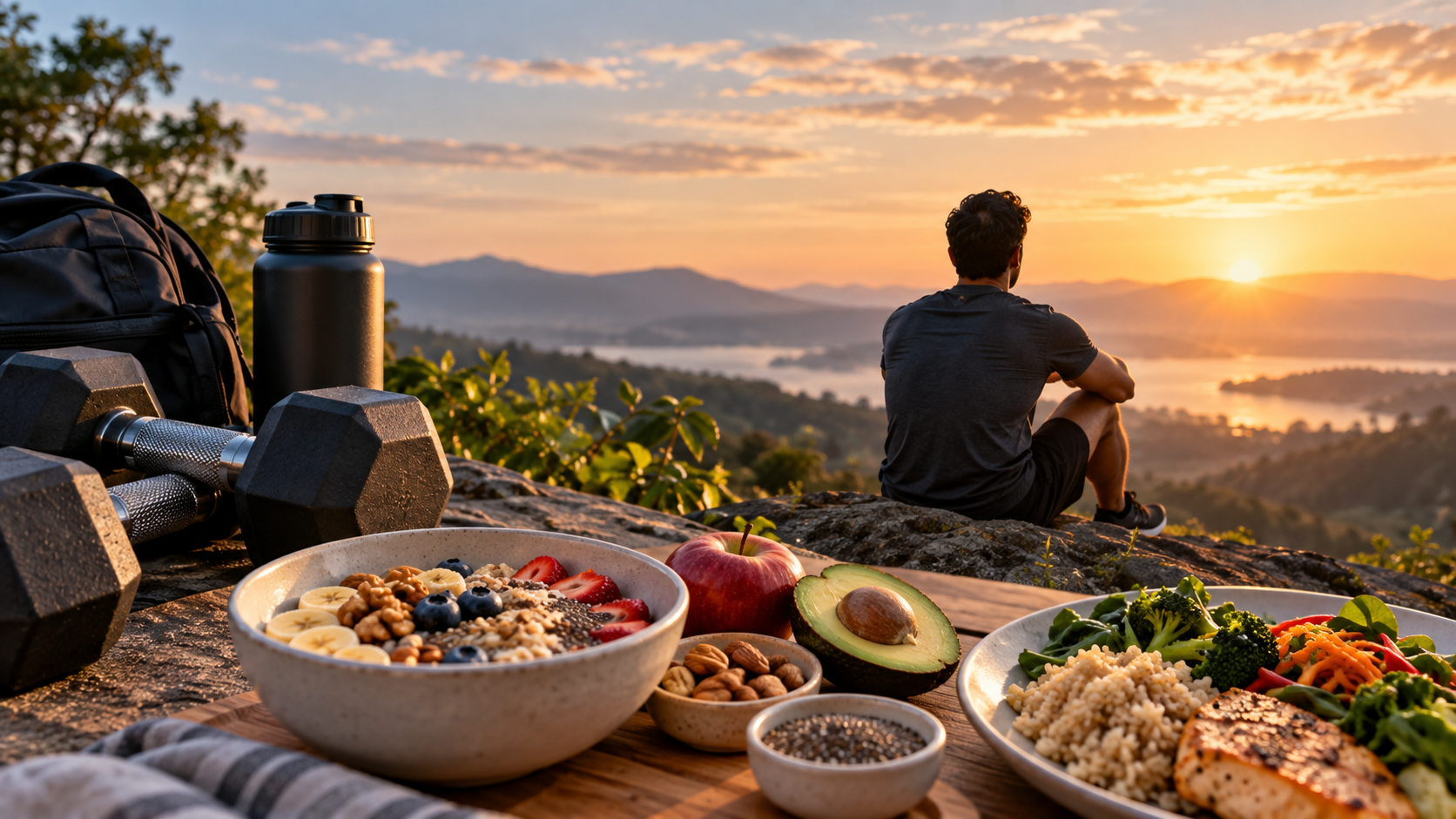
For months, success meant seeing a smaller number on the weighing scale. Today, I'm looking at something much bigger - strength, nutrition, energy and a way of living that I can actually sustain.
For a long time, I knew exactly what I wanted from the weighing scale.
I wanted the number to go down.
And it did.
I went from around 89 kg to 75 kg.
Every kilogram I lost felt like progress.
But as I've written about before, somewhere along that journey I realized that I wasn't just losing fat. I had become much leaner, and I also felt that I had lost muscle along the way.
That realization changed the direction of my health journey.
Today, I still step on the scale.
I still pay attention to my weight.
But I'm no longer trying to see how low I can make that number go.
I'm trying to build a healthier body.
And I've discovered that those are two very different goals.
I Used to Ask: "How Many Calories Are in This?"
When I was focused on losing weight, calories mattered a lot.
And they still matter.
Understanding calories taught me something valuable: it's surprisingly easy to eat more than your body needs without realizing it.
Portion sizes matter.
Snacks matter.
Drinks matter.
Those little bites we barely remember eating matter.
Learning that helped me lose weight.
But eventually, I realized that looking at food only through calories was giving me an incomplete picture.
An apple has calories.
A handful of nuts has calories.
Dal has calories.
Vegetables have calories.
Seeds have calories.
So does a packet of highly processed food.
But those foods aren't nutritionally identical simply because we can assign a calorie number to them.
So I've started asking another question.
"What am I actually getting from this food?"
Protein?
Fiber?
Healthy fats?
Vitamins?
Minerals?
Something that keeps me full?
Something my body can actually use?
That question has changed the way I look at my plate.
I'm Trying to Eat Food, Not Numbers
There was a point when eating could easily become a calculation.
Calories.
Protein.
Carbohydrates.
Fat.
Grams.
Percentages.
Targets.
And tracking these things can be incredibly useful.
I still do it from time to time because it helps me understand how I'm eating.
But I don't want to spend the rest of my life treating every meal like a spreadsheet.
These days, I'm trying to keep things simpler.
Oats.
Eggs.
Fruit.
Nuts and seeds.
Rice.
Dal.
Vegetables.
Curd or buttermilk.
Fish, paneer or some chicken.
Normal food.
Nothing particularly exotic.
Nothing that needs to be ordered from a specialist health store.
Mostly foods that have existed in our kitchens for years.
I'm beginning to believe that eating well doesn't necessarily require discovering some perfect new food.
Sometimes it's simply about making ordinary food better, most of the time.
Protein Matters. But It Isn't the Only Thing That Matters.
Once you start strength training, it's almost impossible to avoid hearing about protein.
And for good reason.
Protein matters.
Especially when you're trying to maintain or build muscle.
After realizing that I'd become very lean during my weight-loss phase, I started paying much more attention to getting enough of it.
But I've also realized that I don't want my entire diet to revolve around one nutrient.
I don't want to look at an apple and think:
Not enough protein.
Or vegetables and think:
Not enough protein.
Or dal and think only about how many grams of protein are in the bowl.
Food does much more than provide protein.
I also need fiber.
Healthy fats.
Vitamins.
Minerals.
Carbohydrates for energy.
And simply a variety of foods.
So instead of trying to consume the maximum amount of protein possible, I'm trying to consume enough while making the rest of my diet nutritious too.
That's a subtle difference.
But for me, it's an important one.
I'm Eating More Variety Than Before
One of the biggest changes I've made recently isn't particularly exciting.
I'm simply trying to eat more different kinds of real food.
A typical day might include oats, milk, seeds and walnuts.
Eggs.
An apple, banana, orange, avocado or whatever fruit is available.
Rice or millet.
Dal.
Spinach or another leafy vegetable.
Cucumber.
Beetroot.
Some fish, paneer or another protein source.
Curd or buttermilk.
Maybe some nuts during the day.
No individual food on that list is going to magically make me healthy.
That's something I've become increasingly skeptical about - the idea that one ingredient is going to transform our health.
I think the overall pattern matters much more.
Health probably isn't hiding inside one superfood. It's built from hundreds of ordinary choices repeated over time.
And that's actually reassuring.
Because it means eating well doesn't have to be complicated.
The Scale Is Still There. It Just Doesn't Get the Final Vote.
I haven't thrown away my weighing scale.
Weight is still useful information.
If my weight suddenly starts climbing consistently, I want to know.
If it drops unexpectedly, I want to know that too.
But I've stopped treating every small movement as a verdict on whether I'm doing well.
Bodies fluctuate.
So I'm learning to look at other things too.
Is my waist changing?
Am I getting stronger?
How do my clothes fit?
Do I have energy throughout the day?
Am I recovering from workouts?
How do I feel when I wake up?
Can I train harder than I could a few months ago?
Those things tell me something the weighing scale can't.
The number matters.
It just doesn't get the final vote anymore.
Exercise Has Changed Too
My relationship with exercise has evolved along with my relationship with food.
At first, exercise was closely connected to losing weight.
Burn calories.
Do cardio.
Make the number go down.
Today, strength training has become much more important to me.
Not because I'm trying to become a bodybuilder.
I'm not.
I simply like the idea of becoming stronger.
There's something satisfying about realizing that a weight that once felt heavy now feels manageable.
Or that you can do something today that your body couldn't comfortably do a few months ago.
That feels like progress in a way the weighing scale never quite did.
And I'm starting to think about exercise beyond the gym too.
Walking.
Mobility.
Yoga.
Cardiovascular fitness.
Recovery.
Sleep.
They're all connected.
The goal isn't simply to look fit.
I'd like my body to actually be capable.
I'm Trying Not to Turn Health Into Another Obsession
This might be the most important part of what I'm learning.
It's surprisingly easy to turn getting healthy into another form of stress.
You start trying to improve your diet.
Then you're tracking everything.
Then you're worried because you missed your protein target.
Then you feel guilty because you ate something fried.
Then you miss a workout.
Suddenly something that was supposed to improve your life starts controlling it.
I don't want that.
There will be days when I eat extremely well.
There will also be days when I eat pizza.
There will be weeks when I train consistently.
There will probably be weeks when work or family needs more of my attention.
That's life.
I don't think health requires pretending those things won't happen.
The real challenge is being able to return to your normal habits afterwards.
One unhealthy meal doesn't destroy a healthy lifestyle, just as one healthy meal doesn't create one.
What matters is what happens most of the time.
I'm Becoming More Interested in the Long Game
This is probably the biggest shift in my thinking.
When I was trying to lose weight, I was working toward a visible destination.
75 kg.
There was a number.
There was a target.
There was a finish line.
Health doesn't really work like that.
There's no morning when I'm going to wake up and say:
Done. I'm healthy now.
This is something I need to keep doing for decades.
That changes the question completely.
Instead of asking:
"What's the fastest way to get results?"
I'm increasingly asking:
"Could I realistically live like this for years?"
Could I eat this way?
Could I train this way?
Could I maintain these habits?
Could I still enjoy holidays, restaurants, family meals and celebrations?
Could I do all of this without constantly thinking about fitness?
If the answer is no, then however effective something might be for a few weeks, it's probably not the answer I'm looking for.
My Definition of Healthy Is Becoming Simpler
The strange thing is that after trying different approaches, learning about calories, fasting, workouts, protein and nutrition, I'm slowly arriving at something much less complicated.
Eat mostly real food.
Eat a variety of foods.
Get enough protein.
Get enough fiber.
Eat fruits and vegetables.
Don't constantly overeat.
Strength train.
Move regularly.
Sleep properly.
Recover.
Enjoy food.
Enjoy life.
And don't panic when everything isn't perfect.
I'm sure my understanding will continue to change.
That's been one of the biggest lessons of this entire journey.
I'm still experimenting.
I'm still learning.
And I'll probably look back at some of the things I'm doing today and realize I could have done them differently too.
That's okay.
I'm Not Trying to Win Against the Scale Anymore
I started this journey wanting to lose weight.
Then I became interested in building muscle.
Now I'm beginning to think the real goal is much simpler.
I want to build a body that is strong enough, nourished enough and healthy enough to let me live the rest of my life well.
That doesn't have a perfect number attached to it.
And maybe that's why it feels different.
I'm no longer trying to win against the weighing scale.
I'm trying to build something I can maintain.
Something that gives me energy for work.
Something that allows me to be present for my family.
Something that lets me remain active as I get older.
And something that doesn't require me to spend every waking hour thinking about health.
Because ultimately, I don't want health to become my life.
I want my health to help me live it.
This article reflects my personal experience and what I'm currently learning about health, nutrition and fitness. It isn't medical or nutritional advice, and everyone's needs are different.
Continue exploring
I Lost 14 Kg, But I Also Lost Something I Didn't Want To
Going from 89 kg to 75 kg felt like success, but I learned that losing weight and becoming healthier are not always the same thing.
The Day I Finally Started Taking My Health Seriously
I spent years focusing on career, family, responsibilities and the future. Somewhere along the way, I forgot to give the same attention to my health.
What changed when you began thinking about health beyond the number on the scale?
Join the conversation
Different perspectives make these conversations more useful. Share your experience or point of view.
Conversation guidelines
Respectful disagreement, personal experience and constructive discussion are welcome. Harassment, spam and medical misinformation presented as diagnosis are not.
Loading conversation...